Sorted by date, most recent at the top |
| |
| Video Footage |
| |
| Alberta Securities Commission Decision Against Patrick Cochrane, March 12, 2008 |
| Interview with Alexander Koldamasov (March 10, 2008) |
| Nevada Court Judgment Against Foster, Cochrane and Dornan, Aug. 29, 2007 |
| Koldamasov ICCF-13 paper (2007) |
| Dan Waite Letter (Jan. 12, 2007) |
| IESI Bankrupty Schedules, Jan. 9, 2007 |
| Report on Innovative Energy Solutions Inc., March 10, 2006 |
| iESi's new Web site, February 13, 2006 (dead link) |
| iESi fake office photo with Photoshopped corporate logo February 12, 2006 |
| Offices page from iESi Web site (pdf), February 1, 2006 |
| Shareholders page from iESi Web site (pdf), February 1, 2006 |
| Intellectual Property page from iESi Web site, February 1, 2006 |
| Screenshot of blog set up by IESI insider to leak information |
| Krivit ICCF-12 paper |
| Krivit ICCF-12 slides |
| Vysotskii ICCF-12 paper |
| Vysotskii ICCF-12 slides |
| Peter Hagelstein Investment Advisory (Feb. 17, 2005) |
| Alimuhambetova research paper excerpted translations (2005) |
| Alimuhambetova research paper (2005) |
| Koldamasov patent application (Oct. 28, 2002) |
| koldamasov, A.I., ‘‘Energy release with theWolgodonsk reactor,’’ paper presented at New Energy Technolgies on the Millennium Transition Symp., Zurich, Sept. 16, 2000. (unconfirmed record) |
| Koldamasov, A.I. (1998) "Nuclear fusion in field of electric charge,"Proceedings of the 6th Russian Conference on Cold Nuclear Transmutation of Chemical Elements and Ball Lightning, Sochi, Russia, p. 125-137 (unconfirmed record) |
| Koldamasov A I “Yadernyi sintez v pole elektricheskogo razryada”. in 4-ya Rossiiskaya Konferentsiya po Kholodnomu Yadernomu Sintezu i Transmutatsii Yader, RKKhYaSTYa-4 (“Nuclear fusion in the field of an electric discharge”, in Fourth Russian Conference on Cold Fusion and Nuclear transmutation, RCCFNT-4 (unconfirmed record) |
| Koldamasov, A.I. (1991) Journal Technical Physics,61(2), p.188-190 (unconfirmed record) |
| Koldamasov, A.I., Russian Patent No. 2152083 (unconfirmed record) |
| Koldamasov, A.I. (1972) "Ball Lightning in Liquid?," J. Technique of Youth, 8, p.24-25 (unconfirmed record) |
| |
|
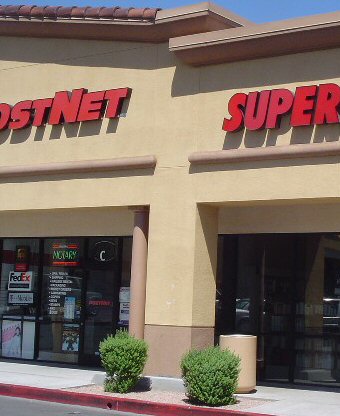
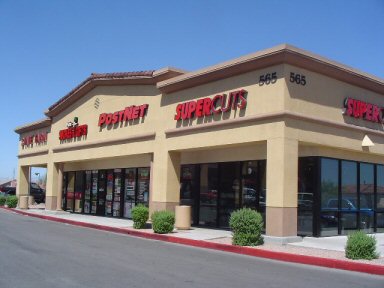
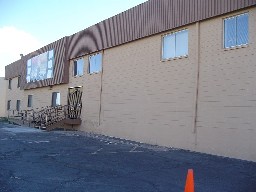
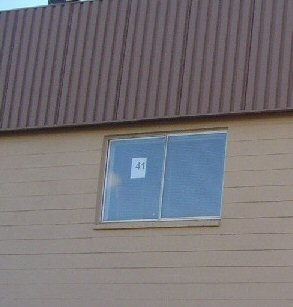
| New Energy Times Photos of iESi "Corporate Offices" (Feb. 1, 2006) |
On Jan. 22, 2006 a New Energy Times (tm) reader informed us that the www.iesiusa.com Web site went dark.
"The website appears to be password protected. I checked and it
appears that the password message that used to appear
only for the private investor section now inhibits access to the
entire site. Do you know what is going on?"
New Energy Times started investigating Innovative Energy Solutions Inc. (iESi) in June, 2005. At that time we signed both a nondisclosure agreement as well an embargo agreement. The embargo agreement expires in February and we will therefore be able to report our findings in our March 10 newsletter. We concluded the major part of our iESi investigation in November, 2005. New Energy Times does not have an ongoing interest in iESi at this time.
New Energy Times is continuing its interest and investigation of Hyunik Yang and the work he has reported at ICCF12.
As a courtesy to interested parties, we captured several of the key pages from the iESi Web site and we present them here, along with photos we took of their "corporate headquarters."
|